
https://engineering.purdue.edu/Engr/Trailblazers
Summary of Purdue TBE Morning Session – July 29, 2025
Why Choose Academia?
- Research is fun – no need for a grand reason.
- Sense of reward: ‘Student success’, ‘life-long friendship’, ‘friends to grab lunch with wherever you go’.
- Advantages: Flexibility in research topics and time, never boring, constant challenges.
- One professor returned to academia after finding industry work too repetitive.
- Becoming a professor is like a low-risk startup.

Preparation During PhD/Postdoc for Faculty Applications
- Gain experience in grant writing – scientific writing is essential.
- Plan strategically for programs like the NSF CAREER (up to 3 applications allowed).
- Gain diverse mentoring experience to evaluate students’ learning curves.
- Attend workshops and network actively. Share proposals with program managers and ask for feedback.
- Lower your expectations for students – few will match your own dedication.
- If unsure about academia vs. industry, try a summer internship to experience it firsthand.
If I Could Do It Over Again
- Write more proposals early on.
- Reach out to peers and program managers more often for feedback.
- Join grant review panels – great way to learn from others’ writing.
- Build collaborations during postdoc – they often lead to joint grant submissions.
Developing Research Vision & Lab Management
- Formulating a research vision is one of the most challenging tasks.
- When evaluating potential students, ask them to summarize two-three papers.
- It’s getting harder to assess students due to AI-generated work.
- Lab culture affects tenure – set it thoughtfully.
- Avoid emotional responses when students don’t perform – ‘It is what it is’.
Zoom Interview Tips
- Think practically about funding – be specific.
- Identify top three funding agencies and programs.
- Have a clear plan combining high-risk and low-risk research projects.
Tips for Life as a Professor
- You’ll write many applications – often only one paragraph needs tailoring.
- Collaboration often leads to insights – others may suggest applying your system to new areas.
- Learn to delegate – don’t try to do everything yourself. Set deadlines and trust others.
Additional Resources
- NCFDD: Faculty Success Program – learn time management, how to say no, and how to plan your research.
- Attend university-level grant writing workshops – very helpful for faculty.
Summary of Purdue TBE Morning Session – July 29, 2025 (10:00 AM, Dr. Andrew Alleyne, Dean of Minnesota)
Career Philosophy & Tenure
- Opportunities come from movement – ‘Opportunities have legs’. You have to walk around to find them.
- Tenure is not the end, it is a milestone.
- If you chase tenure without a ‘why’, you risk declining after reaching it – don’t peak and fall.
University Finance & Teaching Importance
- Ratio of tuition-based revenue to grant overhead revenue is 4:1.
- This highlights why teaching is important – student tuition is a major financial support for the institution.
Listening for Impactful Research
- ‘Listen hard’ – great research comes from deeply listening to needs.
- Listen to frustrations from industry professionals and medical doctors.
- After a year or two of attentive listening, patterns and problems to solve will emerge.
- Don’t offer quick solutions – just listen first.
Purpose of Grant Writing
- Question: ‘Why do I need to write grants?’
- Typical answer: ‘Because you need tenure.’
- But if tenure isn’t your primary goal, then why?
- Answer: Grant money is a tool for exchange – it empowers you to build a successful team.
- This mindset should be reflected in fellowship applications: how funding enables your career growth and impact.
Saying No to Service Requests
- Don’t say ‘No’ – say ‘Not now.’
- Offer alternatives: e.g., ‘Can we revisit this in a year?’ or ‘If I take this on, I need to drop something else.’
- Balance two main types of service: Department service and Professional society service.
Mindset & Quotes
- ‘Pressure is a privilege’ – Doc Rivers. It means people care about what you do.
- ‘You succeed or you learn – that’s it. No failure.’
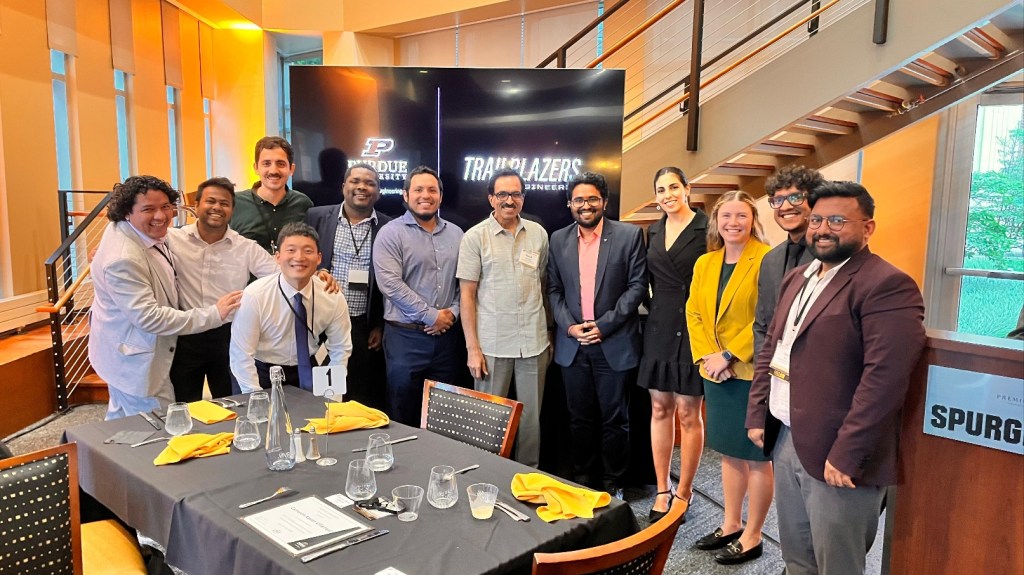
Purdue TBE Afternoon Session Summary – July 29, 2025 (2 PM, Strong Faculty Applications)
Department Heads Present
- ⋅ Rao S. Govindaraju – Civil Engineering
- ⋅ Nathan Mosier – Agricultural and Biological Engineering
- ⋅ Young-Jun Son – Industrial Engineering
- ⋅ Lia Stanciu – Materials Engineering
- ⋅ Eckhard Groll – Mechanical Engineering
- ⋅ SeungJin Kim – Nuclear Engineering
Faculty Application Preparation Tips
- Cover letter must be specific and tailored to the position.
- CV should highlight publications and achievements – make first-author papers easily visible.
- Research statement should resemble a small grant proposal – include a specific funding plan.
- Read the job description carefully and reflect it in your documents, including CV.
- Think of the department as a sports team – how will you fill the gap or make it more competitive?
- Highlight your potential contributions across research, teaching, mentoring, and service.
- Be specific on how your expertise aligns with the department’s research and teaching needs.
Differentiation Strategies
- Top priority: strong publication record.
- Awards, presentations, mentoring, and fellowships also help you stand out.
- Graphics can be powerful – even the Dean noted the impact of visual elements in documents.
Recommendation Letters
- It’s helpful if your advisor knows someone on the Search Committee or Department Head.
- An email from your advisor recommending you to the chair or committee can have significant impact.
- Recognition by NAE/NAM/AAAS or similar visibility in the field is also important.
Q&A and Additional Tips
- First two paragraphs of the cover letter must emphasize area match and unique contributions.
- Focus on what you will do in the future – not just what you’ve done in the past.
- Demonstrate strength in all aspects: research, funding, communication, mentoring, service, outreach.

Purdue TBE Morning Session Summary – July 30, 2025 (Success Strategies for New Faculty)
Session Overview
- Session: Success Strategies for New Faculty Members
- Speakers: Richard M. Felder & Rebecca Brent (North Carolina State University, Education Designs LLC)
- Use this in your cover letter to explain why you’re unique, likely to succeed as a faculty member, and a strong fit for the department.
Faculty Productivity Insights
- 95% of faculty reach full productivity in research and teaching within 4–5 years.
- 5% are quick starters who achieve full productivity within 1–2 years – the secret is avoiding 4 common mistakes.
Mistake #1: Working without Clear Goals and Plans
- Avoid overcommitting – only say yes to committee work relevant to tenure (department and professional society).
- Good activities: NSF grant review panels, graduate student selection committees.
- Ask mentors or department heads before accepting commitments.
- Practice saying ‘No’ with polite phrases like:
- ‘That sounds interesting, but may I call you back tomorrow?’
- ‘I’m overcommitted right now’ or ‘Maybe just an informal conversation?’
Mistake #2: Working Non-Stop and Alone
- Don’t isolate yourself – get support and learn the faculty culture.
- Schedule 1:1 meetings with all faculty in your department during your first semester.
- Attend meals and social events – building relationships is key.
- Observe departmental dynamics to identify influential faculty and seek their advice.
Mistake #3: Spending Too Little Time on Big Writing Projects
- Urgent tasks like teaching prep overshadow long-term writing goals.
- Solution: Brief Daily Writing Sessions (BDS) – 30 to 60 minutes daily writing.
- Separate creating and editing – free write first, revise later.
- Use Pomodoro timers to focus and batch writing into manageable chunks.
Mistake #4: Overpreparing for Classes
- Don’t spend 7–9 hours preparing for a 1-hour class.
- Teach only the most important content.
- If you don’t know something, promise to follow up and share later – builds credibility and accountability.
- Prepare some extra discussion activities in case class ends early.
- Clearly communicate expectations and assessment criteria to students.
- Differentiate between ‘need-to-know’ and ‘nice-to-know’ content.
Teaching Strategies
- Active learning restores attention that declines exponentially.
- Call on students instead of relying on volunteers – instills readiness.
- Use midterm evaluations to anonymously gather feedback and improve.
- Praise and recognition matter – students are human too.
 jongwonlim.com