The COVID-19 pandemic has highlighted the interconnectedness and interdependence of our world. It has disproportionately affected marginalized communities and demonstrated the global spread of viral mutations. This emphasizes the crucial need for equitable access to diagnostics and international collaboration in the fight against infectious diseases.
Studies consistently reveal that COVID-19 has had a greater impact on individuals in under-resourced regions. Limited access to testing in these communities worsened the pandemic’s effects, exposing systemic disparities in healthcare infrastructure and resources. Additionally, the spread of viral mutations across borders illustrates the interconnectedness of our world, as outbreaks in one country swiftly affect others globally.
This interconnectedness underscores the immediate necessity for equitable access to diagnostics. It’s not only a humanitarian issue but also vital for effectively preventing and controlling pandemics. By guaranteeing that diagnostics are accessible to all, irrespective of socioeconomic status or geographic location, we can detect and isolate cases early, thereby limiting the spread of infectious diseases and reducing their impact on vulnerable populations.
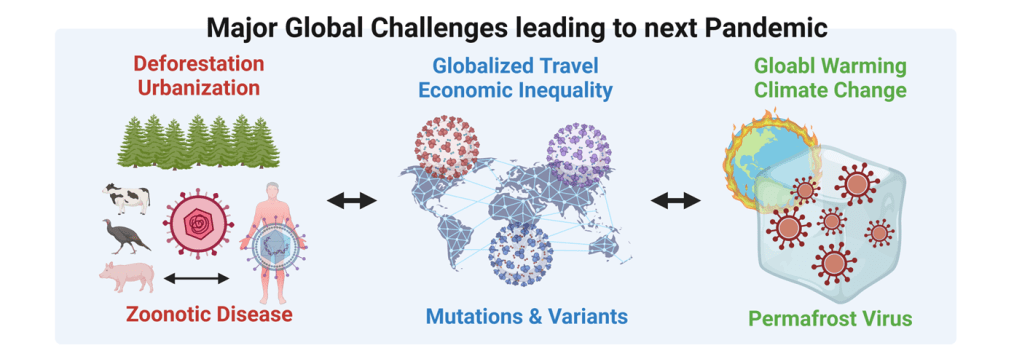
Looking ahead, it is imperative to recognize that the threat of future pandemics looms large. Three significant factors contribute to this looming risk:
- Deforestation and Urbanization: As urban areas expand and deforestation continues without restraint, the risk of zoonotic diseases transferring from animals to humans rises. Destruction of natural habitats brings people into closer contact with wildlife, making it easier for novel viruses to spread and new variants to emerge.
- Globalization and Economic Disparities: Our interconnected global economy accelerates the rapid spread of infectious diseases. Economic inequality worsens this trend, as differences in healthcare access and resources create ideal conditions for viruses to transmit and mutate. Mutations originating in one country can quickly spread across borders, leading to widespread outbreaks with severe consequences.
- Climate Change and Permafrost Thawing: Climate change poses a serious threat to public health by thawing permafrost, which has been frozen for thousands of years. This thawing releases ancient viruses that could infect humans and other species. Since there is little to no immunity to these pathogens, the emergence of a single virus capable of causing widespread harm could have catastrophic effects.
Given these challenges, it is imperative to take proactive steps to improve global readiness for future pandemics. This involves prioritizing fair access to diagnostics, bolstering international cooperation on disease surveillance and response, and tackling the underlying causes of emerging infectious diseases, such as deforestation, economic inequality, and climate change.
In conclusion, ensuring public health in our interconnected world demands a collective dedication to solidarity, equity, and collaboration. By investing in preventive measures and prioritizing the health of every individual, we can forge a stronger and more resilient global community, better equipped to confront future pandemics.
 jongwonlim.com