As the world continues to deal with the ongoing challenge of infectious diseases, the creation of advanced diagnostic tools is becoming increasingly important in preventing pandemics. By looking at how diagnostic technologies have evolved over time, from simple beginnings to exciting future versions, we can see a way forward toward easier, more effective, and proactive disease detection.
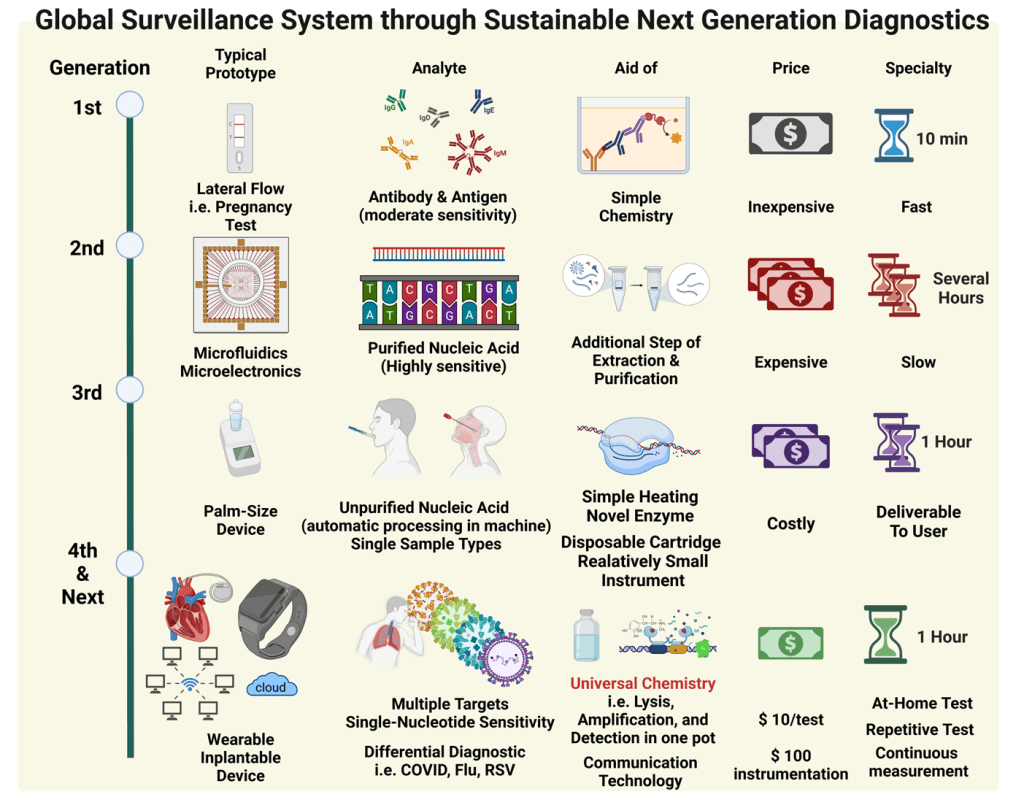
1st Generation Diagnostics:
The beginning of diagnostic tools can be symbolized by the simplicity and ease of use of the first generation, as seen in lateral flow assays like those in pregnancy tests. These tests worked based on simple chemical interactions between antibodies and antigens, giving quick results in just minutes and at low cost. Although they were useful for certain purposes, their sensitivity and accuracy were somewhat limited, making it challenging to detect pathogens in the early stages of infection.
2nd Generation Diagnostics:
The introduction of the second generation represented a major advancement, as scientists incorporated automation and nucleic acid amplification methods like PCR into diagnostic systems. By moving away from antibodies and focusing on nucleic acids, the sensitivity and specificity greatly improved, allowing the detection of pathogens even at very low concentrations. However, this enhanced sensitivity came with drawbacks – the tests became more complex, took longer to complete, and required purified starting materials, limiting their use to centralized laboratories with advanced equipment and trained staff.
3rd Generation Diagnostics:
The arrival of the third generation marked a significant shift towards portability and ease of use, represented by palm-sized portable devices. Advancements in miniaturization and simplified chemistry led to diagnostic tools that could be operated by beginners in various settings. These devices did away with the requirement for sample purification and included disposable cartridges to prevent contamination, making them more accessible. However, cost remained a hurdle, restricting their use in areas with limited resources.
4th Generation and Beyond:
In the future, the fourth generation and beyond foresee diagnostic tools that break traditional barriers, introducing wearable or implantable devices capable of continuous, regular monitoring. These innovative tools aim to detect multiple pathogens at the same time, employing universal chemistry and integrated communication technologies. With costs slashed to less than $10 per test and results available in under 20 minutes, these devices hold the potential to revolutionize at-home testing and surveillance endeavors.
Importantly, these advanced diagnostic tools have enormous potential for monitoring emerging pathogens in vulnerable environments like deforested areas and agricultural settings. By offering real-time information about viral dynamics, they enable communities to take proactive steps to reduce the risk of future pandemics.
In summary, the development of diagnostic tools reflects a path of innovation and advancement, motivated by the need to protect public health in our interconnected global community. By prioritizing accessibility, affordability, and adaptability, we can leverage the revolutionary capabilities of next-generation diagnostics to strengthen our defenses against infectious diseases and shape a future that is healthier and more resilient for all.
 jongwonlim.com